
The 4Ps offer a shared language for consistent high quality teaching. In this five-part series, Matt Bromley breaks down each one and offers practical strategies for teachers. In part three, he breaks down the fourth P – progress… This article first appeared in SecEd Magazine on 21 May 2024. My 4Ps framework has been formulatedContinue reading “The 4Ps: Progress”
Author Archives: Administrator
The 4Ps: Pace
The 4Ps offer a shared language for consistent high quality teaching. In this five-part series, Matt Bromley breaks down each one and offers practical strategies for teachers. In part three, he breaks down the third P – pace… This article first appeared in SecEd Magazine on 14 May 2024. My 4Ps framework has been formulatedContinue reading “The 4Ps: Pace”
Improving the attendance of disadvantaged students
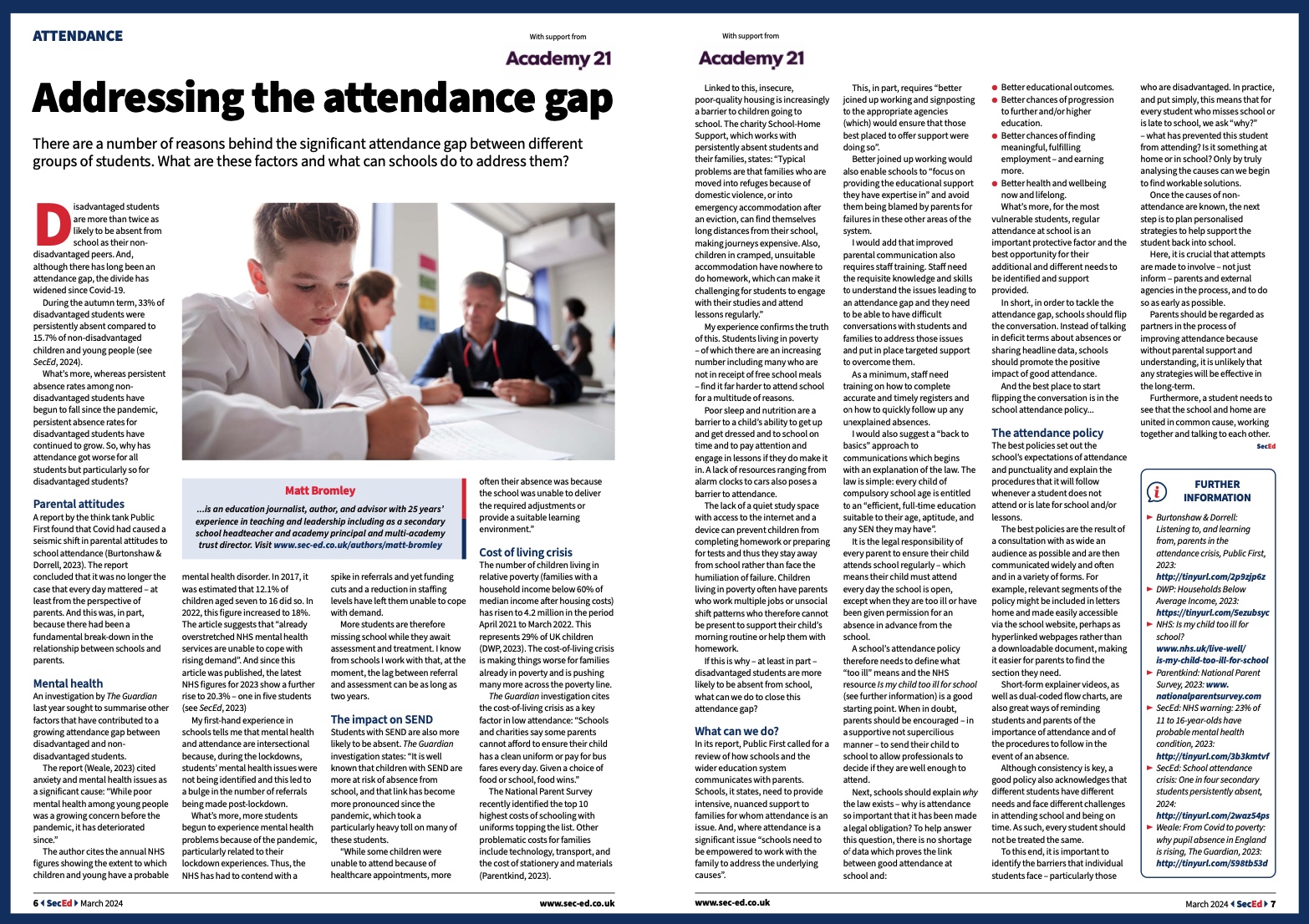
This article first appeared in SecEd’s Vulnerable Learners supplement in March 2024… Disadvantaged pupils are more than twice as likely to be absent from school as their non-disadvantaged peers. And, although there has long been an attendance gap, the divide has widened since the Covid-19 pandemic. In 2022-2023, 37.9% of disadvantaged pupils were persistently absentContinue reading “Improving the attendance of disadvantaged students”
The 4Ps: Pitch
The 4Ps offer a shared language for consistent high quality teaching. In this five-part series, Matt Bromley breaks down each one and offers practical strategies for teachers. In part three, he breaks down the second P – pitch… This article first appeared in SecEd Magazine on 7 May 2024. My 4Ps framework has been formulatedContinue reading “The 4Ps: Pitch”
The 4Ps: Purpose
The 4Ps offer a shared language for consistent high quality teaching. In this five-part series, Matt Bromley breaks down each one and offers practical strategies for teachers. In part two, he breaks down the first P – purpose… This article first appeared in SecEd Magazine on 1 May 2024. Last time, in the first articleContinue reading “The 4Ps: Purpose”
The 4Ps: A shared language for high-quality teaching
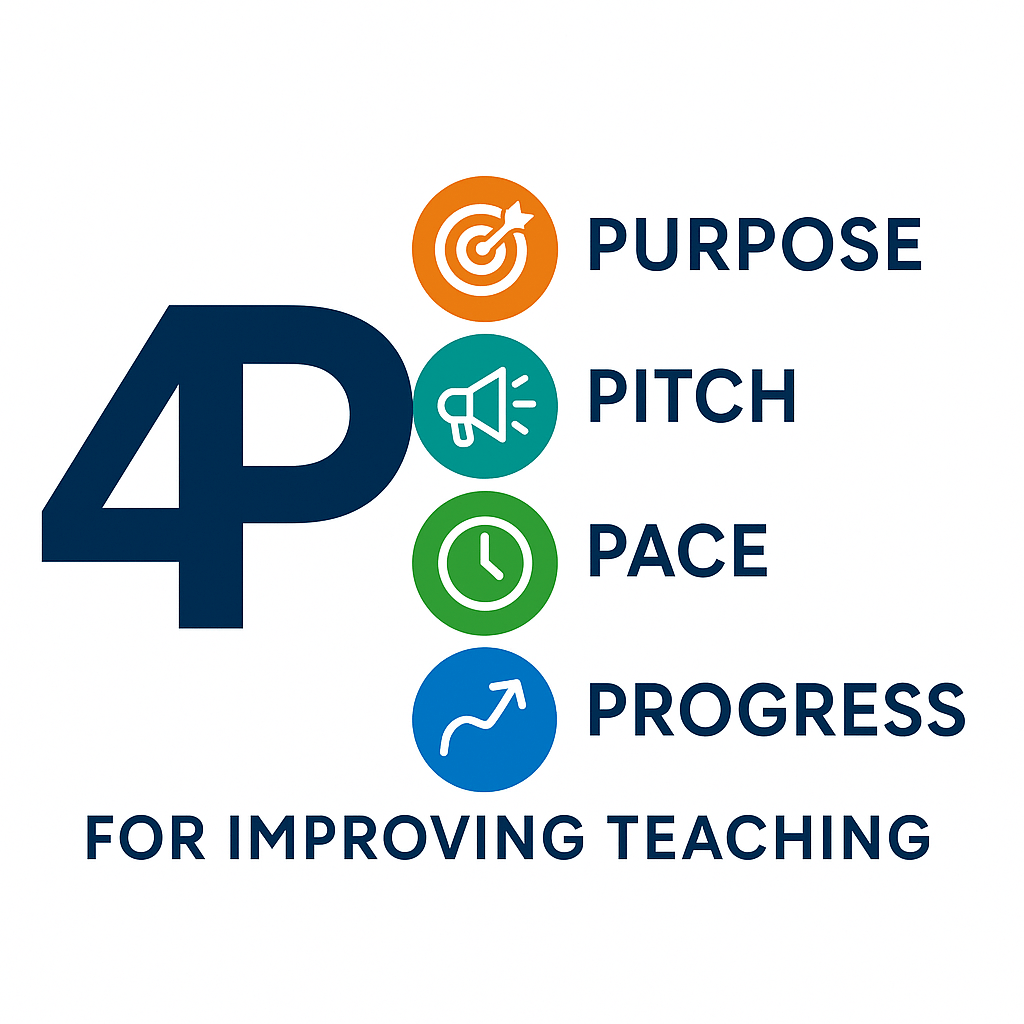
The 4Ps offer a shared language for consistent high quality teaching and curriculum delivery. In this five-part series, Matt Bromley breaks down each one and offers practical strategies and self-evaluation criteria for teachers. In part one, he introduces the 4Ps… This article first appeared in SecEd Magazine on 24 April 2024. One of the schoolsContinue reading “The 4Ps: A shared language for high-quality teaching”
A mirror and a window: Using the curriculum to include the excluded
Knowledge begets knowledge. The more you know, the easier it is to know more. But the opposite is also true meaning we often exclude students from learning unwittingly. Matt Bromley offers a three-point plan to address this… This article first appeared in SecEd Magazine on 19 March 2024. In my keynote at SecEd’s recent National SENDContinue reading “A mirror and a window: Using the curriculum to include the excluded”
Making English more relatable
How can we ensure that our English lessons speak to our students’ lived experiences and thus engage their attention and allow them to see the vital relevance of this core subject? Matt Bromley advises… This article first appeared in SecEd Magazine on 4 March 2024. In a recent video for the Let’s Talk English series, I arguedContinue reading “Making English more relatable”
Why social class should be the 10th protected characteristic – PART TWO
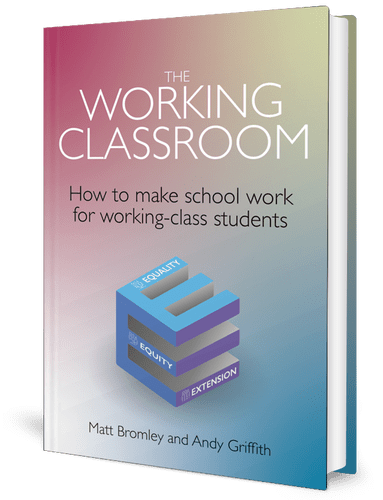
This is a version of an article by Matt Bromley which has appeared in various publications including Headteacher Update, SecEd, and DiverseEd, written to accompany the book, The Working Classroom. This is part two of a 2-part series. Catch up with part one. Last time, I argued that social class should be the 10th protected characteristic.Continue reading “Why social class should be the 10th protected characteristic – PART TWO”
What can we do to make secondary schools work better for working-class students?
This is a version of an article by Matt Bromley which first appeared in HWRK magazine and was written to accompany the book, The Working Classroom. The education system is rigged in favour of the privileged. Working-class students are disadvantaged from day one: their birth is, all too often, their destiny. To truly tackle inequality,Continue reading “What can we do to make secondary schools work better for working-class students?”
 bee | Bromley Education Enterprises Limited