
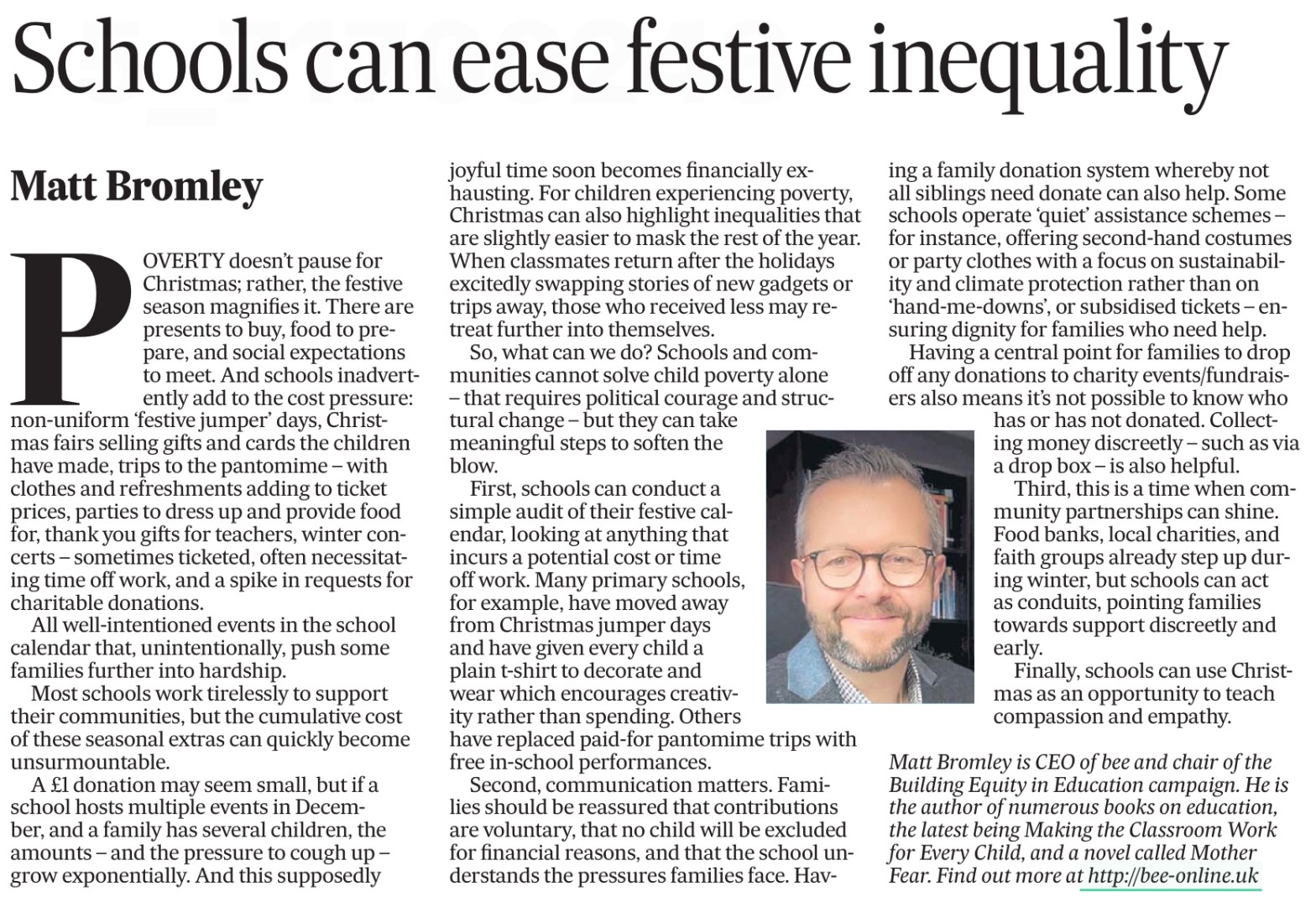
This is an edited version of an article that appeared in The Yorkshire Post on 10 December 2025 in which Matt Bromley argues that schools can do more to ease the financial burden of the festive period for families…
Poverty doesn’t pause for Christmas; rather, the festive season magnifies it. There are presents to buy, food to prepare, and social expectations to meet.
And schools inadvertently add to the cost pressure: non-uniform ‘festive jumper’ days, Christmas fairs selling gifts and cards the children have made, trips to the pantomime – with clothes and refreshments adding to ticket prices, parties to dress up and provide food for, thank-you gifts for teachers, winter concerts – sometimes ticketed, often necessitating time off work, and a spike in requests for charitable donations. All well-intentioned events in the school calendar that, unintentionally, push some families further into hardship.
Most schools work tirelessly to support their communities, but the cumulative cost of these seasonal extras can quickly become unsurmountable. A £1 donation may seem small, but if a school hosts multiple events in December, and a family has several children, the amounts – and the pressure to cough up – grow exponentially. And this supposedly joyful time soon becomes financially exhausting.
For children experiencing poverty, Christmas can also highlight inequalities that are slightly easier to mask the rest of the year. When classmates return after the holidays excitedly swapping stories of new gadgets or trips away, those who received less may retreat further into themselves. Shame and embarrassment proving as corrosive as hunger and cold.
So, what can we do? Schools and communities cannot solve child poverty alone – that requires political courage and structural change – but they can take meaningful steps to soften the blow.
First, schools can conduct a simple audit of their festive calendar, looking at anything that incurs a potential cost or time off work. Many primary schools, for example, have moved away from Christmas jumper days and have given every child a plain tee-shirt to decorate and wear which encourages creativity rather than spending. Others have replaced paid-for pantomime trips with free in-school performances. Such changes preserve the joy of the season while removing the cost barriers.
Second, communication matters. Families should be reassured that contributions are voluntary, that no child will be excluded for financial reasons, and that the school understands the pressures families face. Having a family donation system whereby not all siblings need donate can also help. Some schools operate ‘quiet’ assistance schemes – for instance, offering second-hand costumes or party clothes with a focus on sustainability and climate protection rather than on ‘hand-me-downs’, or subsidised tickets – ensuring dignity for families who need help. Having a central point for families to drop off any donations to charity events/fundraisers also means it’s not possible to know who has or has not donated. Collecting money discreetly – such as via a drop box – is also helpful.
Third, this is a time when community partnerships can shine. Food banks, local charities, and faith groups already step up during winter, but schools can act as conduits, pointing families towards support discreetly and early. Many schools also host donation drives, not only for food but for warm clothing, toiletries, and toys. When done sensitively, these schemes can turn community generosity into tangible relief for struggling households.
Finally, schools can use Christmas as an opportunity to teach compassion and empathy. Pupils can be encouraged to think beyond consumerism – to focus on kindness, volunteering, and the spirit of giving time rather than buying things. Such lessons help all children, regardless of background, to understand that Christmas is not a competition of material possessions.


 bee | Bromley Education Enterprises Limited