

In the final instalment in this 6-part series originally published in SecEd Magazine, Matt Bromley analyses Ofsted’s new evaluation areas. In this article, he explores leadership and governance…
Ofsted’s new inspection framework has been unveiled and the first inspections have begun. In this series, I am exploring the six core evaluation areas that schools are to be judged upon in the new report cards.
Do not interpret my advice as constituting a checklist; rather, it is a sense-check, a way of helping you start a conversation with colleagues about your daily practice and your evidence-base. Use your professional judgement throughout: take away anything you think will be helpful but ignore anything that doesn’t fit your context or approach.
In this, part 6 of our series, I will be focusing on leadership and governance.
Key questions
At its most basic, inspectors are looking to answer two questions about leadership and governance:
- Do leaders and those responsible for governance collectively ensure that the school’s provision enables every pupil to thrive?
- Are leaders and those responsible for governance committed to raising standards of education and care to improve the lives of all pupils, especially those who are disadvantaged, those with SEND, those who are known (or previously known) to children’s social care, and those who may face other barriers to their learning and/or wellbeing?
Inspectors will focus on gathering evidence relating to the factors that statutory and non-statutory guidance, professional standards, research and inspection evidence indicate contribute most strongly to leadership and governance. These factors are:
- Having a clear and strategic approach to improvement, in which leaders accurately monitor the school’s context and prioritise actions that address the most significant barriers to learning.
- Managing the school as an organisation effectively, including organising staff strategically and removing barriers and distractions from core classroom activities.
- Leaders making decisions in the best interests of pupils, including prioritising the experiences and outcomes of the groups listed above.
- Leaders having a reflective understanding of the school’s strengths and areas for development and taking effective action to engage the school community to improve and/or to sustain high standards.
- Having a coherent professional learning programme for all staff that is rooted in a culture of purposeful collaboration, focuses on building collective expertise, and enables expert teaching across all subjects and phases.
- Leaders and those responsible for governance (where relevant) understanding their respective roles and their performance in these roles in a way that enhances the school’s effectiveness.
- Parents and the school community engaging and participating in a thoughtful and positive way that supports pupils’ education.
- The responsible body taking into account the workload and wellbeing of leaders and, in turn, leaders taking into account the workload and wellbeing of their staff.
So, what might this look like in practice? Let’s explore each factor in turn…
1, Clear and strategic approach to improvement
What it might look like in practice:
- Leaders have a well-documented school improvement plan that targets the most significant barriers to learning.
- Priorities are based on robust self-evaluation and evidence.
Actions to take:
- Regularly review the school context.
- Analyse pupil data.
- Identify key barriers (e.g. attendance, literacy).
- Set measurable improvement objectives.
How to prepare:
- Keep an updated, evidence-based improvement plan with clear priorities, timelines, and impact measures – then ensure governors and senior leadership can articulate these.
2, Effective management of the school as an organisation
What it might look like in practice:
- Staff are deployed strategically.
- Administrative systems run smoothly.
- Teachers can focus on classroom activities without unnecessary distractions.
Actions to take:
- Map staff roles to key priorities.
- Streamline non-teaching duties.
- Provide clear lines of accountability.
How to prepare:
- Maintain organisational charts, timetables, and role descriptions.
- Evidence examples where operational decisions directly supported teaching and learning.
3, Leaders make decisions in the best interests of pupils
What it might look like in practice:
- Decisions prioritise learning outcomes and pupil experiences, especially for disadvantaged pupils, SEND, or those with social care involvement.
Actions to take:
- Review policies and interventions to check alignment with pupil needs.
- Ensure decisions are informed by pupil voice, data, and research.
How to prepare:
- Keep decision logs, case studies of strategic choices, and evidence of impact on pupil outcomes.
4, Reflective understanding of strengths and areas for development
What it might look like in practice:
- Leaders regularly evaluate school performance, engage staff and governors in self-review, and act on identified areas.
Actions to take:
- Conduct internal audits, lesson observations, and stakeholder surveys.
- Develop action plans based on findings.
How to prepare:
- Maintain records of self-evaluation activities, action plans, review meetings, and examples of implemented improvements.
5, Coherent professional learning programme
What it might look like in practice:
- CPD is planned, purposeful, collaborative, and builds collective expertise.
- Teachers develop subject knowledge and pedagogical skills aligned with school priorities.
Actions to take:
- Map CPD to school improvement priorities.
- Provide subject-specific training and mentoring.
- Evaluate impact on teaching and learning.
How to prepare:
- Keep CPD calendars, training records, feedback summaries, and evidence of improved classroom practice.
6, Clear understanding of roles and responsibilities for leaders and governors
What it might look like in practice:
- Leaders and governors understand their remit, work collaboratively, hold each other accountable, and focus on improving outcomes.
Actions to take:
- Provide training for governors and senior leaders, clarify reporting lines, and conduct regular performance reviews.
How to prepare:
- Maintain governance minutes, role descriptions, evidence of training, and performance review documentation.
7, Positive engagement of parents and the school community
What it might look like in practice:
- Parents and the wider community are informed, involved, and supportive of the school’s priorities.
Actions to take:
- Develop regular communications, parent forums, and consultation events.
- Actively involve community partners in initiatives.
How to prepare:
- Collect communications records, attendance logs, feedback from parent surveys, and examples of parental input influencing school decisions.
8, Consideration of workload and wellbeing for staff and leaders
What it might look like in practice:
- Leaders monitor workload, promote wellbeing, and ensure sustainable work practices across the school.
Actions to take:
- Conduct workload audits, implement flexible working where possible, provide wellbeing support, and ensure policies support balance.
How to prepare:
- Keep wellbeing action plans, staff survey results, and examples of interventions or adjustments to support staff and leaders.
Strategic leadership
Here’s a useful list of actions to take with regards strategic leadership…
1, Demonstrate consistently high standards of principled and professional conduct
What it might look like in practice:
- Leaders act ethically, model professionalism, and make decisions prioritising pupils’ best interests.
Actions to take:
- Lead by example, maintain transparency in decision-making, and communicate expectations of staff conduct clearly.
Evidence file:
- Code of conduct.
- Communications to staff.
- Examples of decision-making demonstrating pupil-first approaches.
Top tip: Keep records of decisions that show ethical reasoning and a focus on pupil outcomes.
2, Establish and sustain the school’s ethos and strategic direction
What it might look like in practice:
- Leaders articulate a clear vision, aligned with values, and engage the community in shaping school priorities.
Actions to take:
- Review and communicate vision and values regularly, involve governors, staff, parents, and pupils in consultations.
Evidence file:
- Vision statement.
- Meeting minutes.
- Staff and parent consultation feedback.
Top tip: Ensure your ethos is visible across school policies, displays, and communications.
3, Have a clear and ambitious vision for high-quality education for all pupils
What it might look like in practice:
- Leaders set high expectations, prioritise curriculum quality, and strive to meet every pupil’s needs.
Actions to take:
- Benchmark against best practice.
- Review curriculum and teaching standards.
- Set measurable targets.
Evidence file:
- Strategic plan.
- Curriculum maps.
- Pupil outcome data.
- Monitoring reports.
Top tip: Include measurable success criteria for each vision objective
4, Uphold high educational standards for pupils from all backgrounds
What it might look like in practice:
- Leaders ensure all pupils, including disadvantaged and vulnerable groups, are supported to achieve high standards.
Actions to take:
- Monitor progress gaps.
- Evaluate interventions.
- Use data to inform support strategies.
Evidence file:
- Progress data.
- Pupil Premium strategy.
- SEND provision documents.
Top tip: Highlight improvements for specific pupil groups to show impact
5, Ensure the school week meets DfE minimum expectations
What it might look like in practice:
- Timetable planning ensures all pupils receive at least 32.5 hours per week, including enrichment activities.
Actions to take:
- Audit school timetable, include curricular and co-curricular activities, and adjust where needed.
Evidence file:
- Timetables.
- Enrichment schedules.
- Attendance registers.
Top tip: Regularly review timetable effectiveness against pupil outcomes
6, Establish and sustain a positive and enriching school culture
What it might look like in practice:
- Pupils enjoy learning, participate in enrichment and experience a welcoming environment.
Actions to take:
- Promote inclusive policies.
- Provide diverse enrichment opportunities.
- Celebrate achievements.
Evidence file:
- Enrichment logs.
- Pupil feedback.
- Behaviour data.
- School culture surveys.
Top tip: Use pupil voice to shape and improve the school culture
7, Promote positive and respectful relationships across the school community
What it might look like in practice:
- Staff and pupils demonstrate courtesy, empathy, and collaboration.
- Conflicts are managed effectively.
Actions to take:
- Embed values in curriculum and policies, provide relationship and behaviour training.
Evidence file:
- Behaviour policies.
- Training records.
- Incident logs.
- Pupil survey results.
Top tip: Highlight initiatives that improve relationships and reduce incidents
8, Take a strategic approach to improvement
What it might look like in practice:
- Leaders identify priorities based on evidence, plan interventions, and review impact to enhance pupil outcomes.
Actions to take:
- Use data, audits, and research to prioritise initiatives.
- Create action plans with clear success measures.
Evidence file:
- Improvement plans.
- Monitoring reports.
- Impact reviews.
Top tip: Document rationale for prioritising each action for inspection clarity
9, Promote effective use of resources, including digital technologies
What it might look like in practice:
- Resources are deployed efficiently to support learning; digital tools enhance teaching and pupil engagement.
Actions to take:
- Audit resource allocation.
- Evaluate digital tools’ effectiveness.
- Ensure equitable access.
Evidence file:
- Budget plans.
- IT strategy.
- Lesson observations showing resource impact.
Top tip: Show measurable benefits from resource investments on learning outcomes
10, Know and act within professional standards and statutory duties
What it might look like in practice:
- Leaders comply with legislation, statutory guidance, and professional expectations in all aspects of school leadership.
Actions to take:
- Keep up-to-date with legal requirements.
- Review policies.
- Ensure compliance.
Evidence file:
- Policy reviews.
- Statutory compliance checklists.
- Training records.
Top tip: Keep a dated compliance log to demonstrate on-going adherence
Governance
Here’s a useful list of actions to take with regards governance…
1, Governors are knowledgeable about their statutory duties and carry them out effectively
What it might look like in practice:
- Governors understand their legal responsibilities (e.g. safeguarding, health and safety, SEND) and review compliance regularly.
Actions to take:
- Provide induction and on-going training for governors.
- Ensure access to statutory guidance.
- Maintain records of compliance checks.
Evidence file:
- Governor training records.
- Minutes showing statutory compliance.
- Policy review logs.
Top tip: Keep an up-to-date register of statutory duties and training to demonstrate awareness and action.
2, Support and challenge the school’s leaders effectively
What it might look like in practice:
- Governors ask probing questions, review data, and challenge decisions constructively to improve outcomes.
Actions to take:
- Schedule termly data reviews.
- Conduct focused committee meetings.
- Document queries and responses.
Evidence file:
- Meeting minutes.
- Challenge logs.
- Records of follow-up actions.
Top tip: Ensure that challenge is evidence-based and linked to measurable pupil outcomes.
3, Understand their role in considering leaders’ workload and wellbeing
What it might look like in practice:
- Governors consider the impact of decisions on staff workload and wellbeing and take steps to mitigate risks.
Actions to take:
- Include wellbeing checks in governance meetings.
- Review staff workload policies.
- Encourage a culture of balance and support.
Evidence file:
- Minutes referencing workload discussions.
- Staff surveys.
- Wellbeing action plans.
Top tip: Link wellbeing initiatives directly to sustainable improvements in teaching and learning.
4, Assure themselves that leaders understand the school context and prioritise high-impact actions
What it might look like in practice:
- Governors ensure improvement plans target the most significant barriers to learning and address the needs of vulnerable pupils.
Actions to take:
- Review strategic plans and data.
- Question rationale for priorities.
- Request evidence of impact.
Evidence file:
- Strategic plans.
- Improvement priority documentation.
- Governors’ monitoring notes.
Top tip: Ask “why this first?” for each improvement action to focus on greatest impact.
5, Ensure monitoring and quality assurance systems are fair, valid, and constructive
What it might look like in practice:
- Governors review monitoring approaches, ensuring they provide meaningful feedback that supports improvement.
Actions to take:
- Audit monitoring processes.
- Review reports.
- Discuss feedback effectiveness with leaders.
Evidence file:
- QA reports.
- Monitoring schedules.
- Feedback forms.
Top tip: Demonstrate that monitoring is both supportive and evaluative, not punitive.
6, Hold leaders to account for the impact of professional learning
What it might look like in practice:
- Governors evaluate the effectiveness of staff development on teaching quality and pupil outcomes.
Actions to take:
- Review CPD plans.
- Observe impact on teaching.
- Link training to curriculum and assessment priorities.
Evidence file:
- CPD evaluation records.
- Staff performance data.
- Governors’ review minutes.
Top tip: Connect training directly to measurable improvements in teaching and learning.
7, Hold leaders to account for provision for vulnerable pupils
What it might look like in practice:
- Governors scrutinise the school’s support for disadvantaged pupils, those with SEND, those known to children’s social care, and other vulnerable groups.
Actions to take:
- Review Pupil Premium strategy.
- SEND provision reports.
- Safeguarding audits.
- Ask leaders for evidence of impact.
Evidence file:
- Pupil progress data.
- Pupil Premium impact reports.
- SEND audits.
- Safeguarding documentation.
Top tip: Focus discussions on the outcomes for vulnerable groups, not just process compliance.
I hope you found that useful. Get in touch if you have questions.
If you want more help, check out the book…

This book is a repost to the snake oil salesmen who’ll tell you what to do to impress inspectors. Don’t be fooled by the title – the subtitle is doing the heavy-lifting. It’s about doing what’s right for your pupils every day, not what’s right for inspectors during their two-day visit. Yes, it unpacks the new framework in a way that makes sense to busy school leaders and teachers, and yes it offers loads of practical tools that will help you evidence what you do, but the advice and resources you”ll find in this book are about the long-haul of genuine and sustainable school improvement, not quick fixes. If in doubt, read a sample of the book, you might be pleasantly surprised!
And consider booking Matt to deliver training in your school…
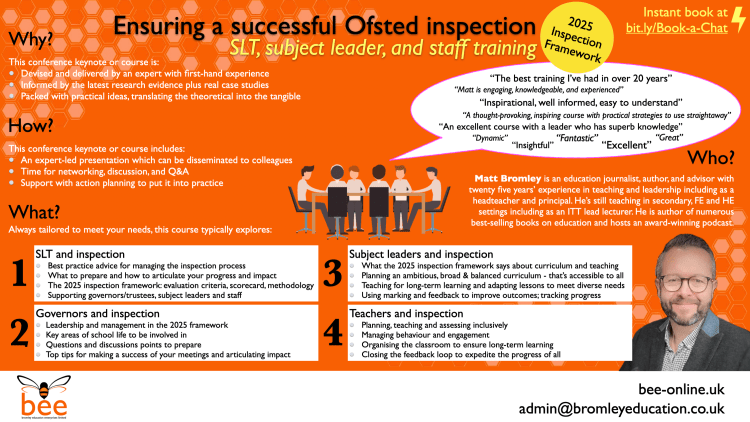
Here’s what colleagues who’ve recently attended Matt’s inspection training have had to say…
“Informative and knowledgeable leader who was both engaging and insightful.”
“Excellent!”
“Very useful – it got us to drill down and reflect on our own practice.”
“Very informative with clear strategic ideas.”
“A very welcome overview of the process.”
“Really informative – it’s made me feel a lot clearer as a new Headteacher of what I need to do to prepare for OFSTED.”
“Very helpful and covered all the main areas.”
“Very thorough and the presenter was engaging.”
“Very informative and thought provoking.”
“Really informative, well-paced, and gave me the information I needed.”
 bee | Bromley Education Enterprises Limited