

This is the final instalment in a five-part series. Catch up with part one, part two, part three, and part four before reading on.
The classroom isn’t working for working-class students.
Last time I suggested we could tackle this by embedding four knowledge domains in our curriculum to give working-class students access to the ‘secret knowledge’ usually reserved for their more affluent, privileged peers. And then we could address the problems inherent in the curriculum – that of coverage and content – and the problems inherent in our assessment system – that it privileges the privileged and fails the working classes – by following a 3-step approach – what Andy Griffith and I, in our book The Working Classroom, call the 3Es of equality > equity > extension.
- Equality through the core curriculum
- Equity through curriculum adaptations and interventions
- Extension through curriculum extras and enhancements
Last time I set out how to achieve equality through the core curriculum. Let’s now turn to the second step…
Step 2: Equity through adaptive teaching and curriculum interventions
The second action in the 3-step process of equality > equity > extension is to achieve equity through adaptive teaching approaches and curriculum intervention strategies…
We’ll look at each of these elements in turn starting with adaptive teaching approaches…
Adaptive teaching approaches
A report in the Guardian newspaper in 2017 claimed that ‘working-class children get less of everything in education’. The report cited the book, Miseducation: Inequality, Education and the Working Classes, by Cambridge University professor Diane Reay, who grew up on a council estate.
Reay argued that “the working classes [get] less education than the middle classes” as well as “less money per head” and “less [sic] qualified teachers” because they “get higher levels of teacher turnover and more supply teachers”. Even if working-class students attend the same schools as their middle-class peers, Reay argued, “they are in lower sets and yet again get less experienced teachers”.
There is a problem of aspiration, too: “If you’re a working-class child, you’re starting the race halfway round the track behind the middle-class child [because] middle-class parents do a lot via extra resources and activities”. Less affluent children get a more restrictive educational offer and are denied an education in art, drama or dance because “their parents can’t afford to pay for them to do those activities out of school”.
To help working-class students catch-up in the race, we therefore need to offer them more than their more affluent peers.
Once we have designed an ambitious curriculum which is broad and balanced, and planned and sequenced, and offered it – with equality – to all students, we need to ensure that all students can access that curriculum and achieve – this is about equity.
We achieve equity by doing more for those who start with less. In other words, we support those students who struggle to access our curriculum by using adaptive teaching approaches and additional intervention strategies.
So, what is adaptive teaching?
I define adaptive teaching as short-term alterations made to the way we teach the core curriculum – extra or different things – in order to allow all students to access that curriculum. We tend to call these alterations ‘scaffolds’ because they are temporary support structures, much like the scaffolding that helps construction workers reach high places, we construct to help students get a foothold.
Scaffolding aims to provide students with temporary supports that are gradually removed or ‘faded out’ as they become increasingly independent. It is a common component of guided practice – sometimes referred to as ‘first, now, next’, building the bigger picture and making connections for learning.
Scaffolds might be visual – such as giving a student a task planner, a list of small steps to take to complete a task, model examples of work, images that support vocabulary learning, and so on.
Scaffolds might be verbal – such as explaining a task in more explicit terms and in smaller steps, repeating an instruction, reteaching a difficult concept, using questioning to address misconceptions, and so on.
And scaffolds might be written – such as a word bank, a writing frame, sentence starters, and so on.
The trick to using scaffolds effectively is to anticipate and assess students’ barriers to learning – which may be different levels of prior knowledge, vocabulary gaps, their ability to decode text, limited working memory capacity, gaps in cultural experiences, a common misconception, a lack of metacognitive knowledge, and so on – then making plans to address the specific barrier – which may be to read a text in advance, supply background knowledge, use images to contextualise information, explicitly teaching vocabulary, and so on. Then we use ongoing assessment to ascertain whether or not the scaffolds are working – we might use questioning, tests, tasks, talk, hinge questions, exit tickets, ‘show me’ mini-whiteboard activities, and so on. And, as a result of these assessments, we make further adaptations ‘on the fly’ such as changing the level of difficulty, changing our language, using analogy, using peer teaching, and so on.
Curriculum intervention strategies
The second element of my approach to achieving equity, after adaptive teaching, is the use of curriculum intervention strategies…
Even with the most ambitious, broad and balanced, and planned and sequenced curriculum to which all students have equal access, even with the most effective quality first teaching, and even with the most carefully planned adaptive teaching strategies, sometimes some students will require more…
Since the National Strategies were launched in the late-1990s, it has been common practice to talk of three waves of intervention. The 3-wave model is often expressed as a pyramid similar to Bloom’s taxonomy whereby Wave 1 sits at the bottom and thus provides the foundations on which all other forms of support are built.
According to the National Strategies, Wave 1 is “quality inclusive teaching which takes into account the learning needs of all the pupils in the classroom”. As such, if we do not first provide students with quality classroom teaching, then no amount of additional intervention and support will help them to catch up.
But, as we say, even with the provision of ‘quality first teaching’, some students will require more – and more tailored – support in the guise of Wave 2 in-class adaptations and Wave 3 additional interventions which take place outside the classroom and off the taught timetable.
Such intervention strategies may take the form of one-to-one support from a teaching assistant or other adult, small group targeted teaching, or support from external agencies. The ultimate aim of additional support, in most cases, is for it to become redundant over time. In other words, we want students to become increasingly independent and for the scaffolds to fall away. Indeed, this is the stated aim of Education Health and Care Plans (EHCPs): over time, discrete funding should be reduced as its impact is felt and students require less and less support.
With this aim in mind, it is important to ensure that all strategic interventions are monitored whilst they are happening and are:
• Brief (20– 50mins),
• Regular (3–5 times per week),
• Sustained (running for 8–20 weeks),
• Carefully timetabled,
• Staffed by well-trained TAs (5–30 hours’ training per intervention),
• Well-planned with structured resources and clear objectives,
• Assessed to identify appropriate pupils, guide areas for focus and track student progress, and
• Linked to classroom teaching.
I’ve worked extensively with schools on their use of the Pupil Premium. Along the way, I’ve developed a three-point plan which is as follows:
- Identify the barriers
- Set the success criteria
- Design and deliver the interventions
Let’s take a closer look at this plan…
Step 1: Identify the barriers
Before we can put in place intervention strategies aimed at supporting working-class students, we must first understand why a gap exists between the attainment of working-class students and their more affluent, privileged peers.
In short, we need to ask ourselves: What are the consequences of class disadvantage faced by my students? What barriers might their class disadvantage pose in class? How does their class disadvantage translate itself, if at all, in terms of their ability to access the ambitious curriculum I am teaching and to achieve in line with their peers?
Step 2: Set the success criteria
The second action on my three-point plan is to set the success criteria.
Once we’ve identified the barriers to learning faced by our disadvantaged students, we need to be clear about what success will look like. We should ask ourselves: what do I expect to see as an outcome? What is my aim here?
In terms of ensuring we meet our success criteria, it’s crucial that any intervention strategy is monitored as it’s happening and not just evaluated once it’s finished. The monitoring may involve more anecdotal data such as student and teacher feedback, but evidence must be gathered throughout the lifespan of the intervention to ensure it is working – or working as well as it could – and so that timely decisions can be taken to stop or tweak an intervention if it is not having the desired effect on student progress. Waiting until the intervention has finished to evaluate its success is too late: if it did not work or did not work as well as it could have done, then time and money have been wasted.
Step 3: Design and deliver the interventions
The third and final step in my three-point plan is design and deliver the interventions.
Interventions work best when they are…
Short term
The best interventions help students to become increasingly independent over time. In other words, the scaffolds slowly fall away. Interventions should, therefore, be planned to run for a finite amount of time, ideally less than a term. Of course, if the evidence shows the intervention is working but that further improvement is needed, then the intervention can be extended, but to slate an intervention for a year, say, is often misguided.
Intensive
Similarly, interventions should be intensive, perhaps with three or more sessions a week rather than just one. And those sessions should also be intensive in the sense of being short, say 20 to 50 minutes in length rather than an hour or more.
Focused
Interventions should be keenly focused on a student’s areas of development rather than be generic. For example, rather than setting a goal of, say, ‘improving a student’s literacy skills’, an intervention strategy should be focused on a specific aspect of literacy such as their knowledge of the plot of Stone Cold or their ability to use embedded quotations in an essay.
Tailored
Interventions need to be tailored to meet the needs of those students accessing them. They must be as personalised as any classroom learning and not be ‘off the peg’ programmes. Assessment data should be used to inform the intervention and to ensure it is being pitched appropriately to fill gaps in the student’s knowledge.
Conclusion
And that’s how I suggest we make the classroom work for working-class students:
• We give all students access to the same ambitious curriculum and don’t dumb down
• We ensure all students can access that curriculum through adaptive teaching and additional interventions
• We ensure our assessment system is fair and doesn’t privilege the privileged
• We equip students with the ‘secret knowledge’ they’d otherwise be denied through funded access to extra-curricular activities and enrichment opportunities
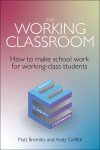
If you want to know more – including what the third step (extras and enhancements) looks like – you’ll have to buy the book! The Working Classroom by Matt Bromley and Andy Griffith is published by Crown House. For more information, click here.
Follow Matt on Twitter @mj_bromley for more teaching tips like these.
 bee | Bromley Education Enterprises Limited